Composite Girder for Metro Track Designed by Purna Engineers
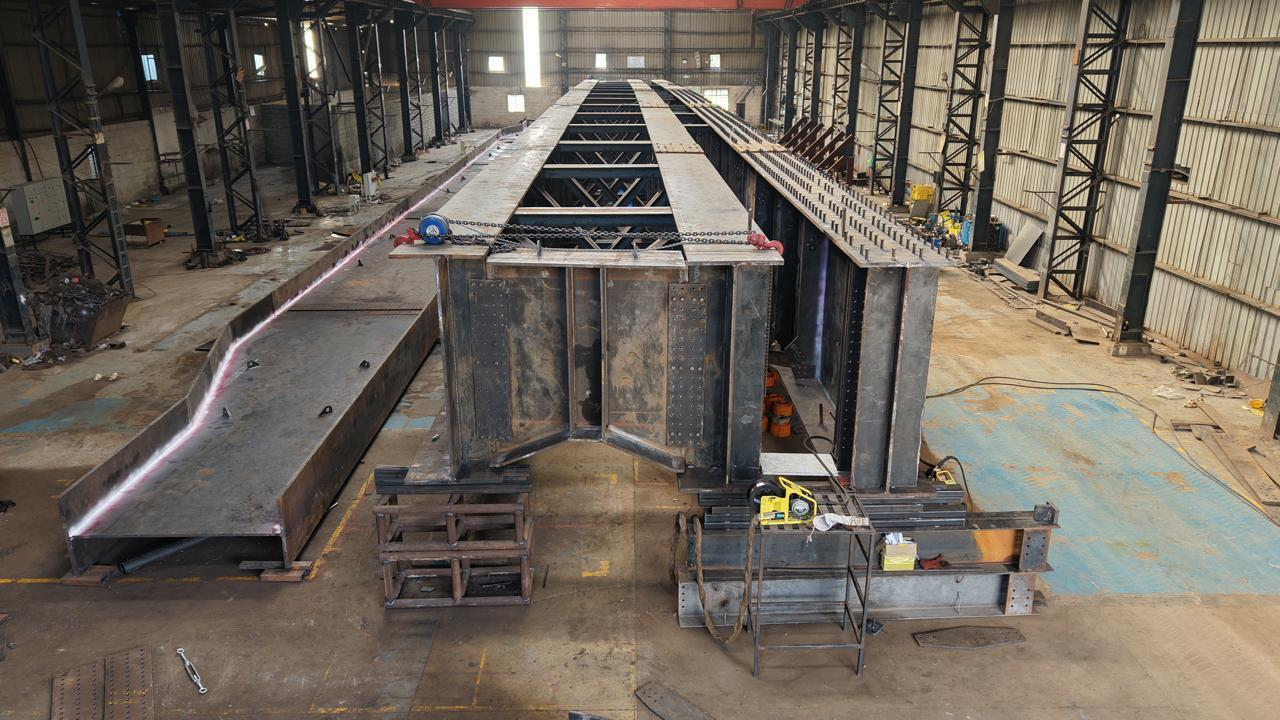
As India’s metro networks expand at an unprecedented pace, so does the need for advanced structural solutions that are lighter, stronger, faster to erect and capable of supporting the demanding loads of modern rail infrastructure. The composite girder shown in this image designed by Purna Engineers is a benchmark example of high performance engineering for metro viaduct systems.
This girder, fabricated inside a controlled workshop environment, represents the cutting edge of steel concrete composite technology, engineered for durability, precision and seamless integration with metro track systems.
What is a Composite Girder?
A composite girder is a structural element that combines high strength steel and reinforced concrete to act together as a single load bearing unit. It leverages the advantages of:
- Steel for tensile strength and speed of erection
- Concrete for compression resistance and long-term durability
This makes composite girders ideal for metro systems, rail viaducts and urban elevated corridors where load demands, seismic conditions and construction speed are critical.
Inside Purna’s Design: Engineering Precision at Every Stage
The girder in the image reflects Purna’s capability to handle complex metro infrastructure design from concept to fabrication support.
1. Optimized Steel Section Geometry
The steel girder consists of:
- Heavy welded plates forming the web and flange
- Cross bracing for torsional stiffness
- Shear connectors to integrate concrete deck slab
The geometry is optimized using advanced design software to meet bending, shear and deflection criteria specified by metro rail standards.
2. Rigorous Load Analysis
Purna Engineers performed detailed analysis considering:
- Metro rolling stock loads
- Emergency braking forces
- Derailment loads
- Thermal effects
- Seismic forces (Zone III, IV, or V depending on region)
- Long-term fatigue
This ensures the girder remains stable and safe over decades of service.
3. Welded Fabrication for Strength
The workshop photograph shows:
- High-precision welding
- Full-penetration welds
- Controlled heat-affected zones
- Automated and semi-automated fabrication processes
These ensure consistency and structural integrity for long spans.
4. Composite Action for Superior Performance
Shear studs visible on the top flange allow the steel girder and the concrete slab to work together. This greatly enhances:
- Load-carrying capacity
- Stiffness
- Vibration control
- Fatigue resistance
Composite action is essential for high frequency metro traffic.